COLLABORATION



MAIN MENU
DOWNLOAD

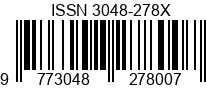
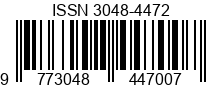
ISSN BARCODE

MATRIX JOURNAL
| Metric | All | Since 2021 |
|---|---|---|
| Citations | 145 | 145 |
| h-index | 6 | 6 |
| i10-index | 4 | 4 |
KEYWORD

Ownership & Journal Management
Institutional publishing information, editorial responsibilities, journal governance, financial transparency, publication rights, and accountability of the Indonesian Tourism Journal (ITJ).
The Indonesian Tourism Journal (ITJ) is a peer-reviewed, open-access scholarly journal published by CV. Austronesia Akademika, Indonesia. The publisher is identified in the journal's official public information and provides the organizational setting for journal administration, production, and dissemination of academic research in tourism and related interdisciplinary fields.
Institutional publishing responsibility should be distinguished from the scientific authority of the editorial team. The publisher supports journal operations, while editorial decisions are made through the academic evaluation procedures and published ethical policies of ITJ. Journal ownership or publishing arrangements do not transfer copyright in individual research articles from their authors.
CV. Austronesia Akademika
Indonesia
Official journal website: https://journal.austrodemika.org/index.php/itj
The journal's official About the Journal page also identifies support from academic collaboration and publishing communities. Such support should not be interpreted as a transfer of publisher responsibility or author copyright ownership.
ITJ maintains a recognizable bibliographic and publication identity to support accurate article citation, discovery, editorial transparency, and continuity of the journal record. Its official profile is summarized below.
The journal title, ISSNs, DOI prefix, publishing organization, and publication frequency should be presented consistently on the journal website, issue covers, article metadata, published PDFs, and indexing records.
The journal operates through editorial leadership and a wider scholarly team. The publisher's operational responsibilities and editorial authority should remain appropriately distinct so that manuscript decisions are based on research quality, relevance, peer review, and publication ethics.
Provides academic editorial leadership, oversees manuscript decision-making and publication standards, and coordinates the journal's scientific editorial direction.
Identified in the official journal profile as Managing Editor and listed on the Editorial Team page as Copyeditor; assists with coordination and production activities within assigned editorial responsibilities.
The complete and current roster of section editors, journal editors, and production personnel is maintained on the ITJ Editorial Team page. This official roster should be consulted for current role assignments, affiliations, and scholarly identifiers.
The Editor in Chief oversees scientific editorial decisions. Publisher and administrative personnel provide operational support without substituting financial or institutional considerations for scholarly review.
A journal-management structure relies on clearly defined academic and production functions. The roles described below follow the editorial categories made public by ITJ, with peer review and publishing administration included as related editorial functions.
Oversees editorial policy, academic standards, peer-review outcomes, and final scientific publication decisions.
Coordinates administrative workflow, schedules, correspondence, and the timely completion of manuscript handling and production tasks.
Coordinate evaluation of submissions in relevant tourism research domains and supervise the scholarly review process for assigned manuscripts.
Assess manuscripts, support peer-review oversight, and provide substantive editorial recommendations and quality control.
Conduct independent, confidential, and evidence-based evaluations of manuscripts within their areas of scholarly expertise.
Reviews accepted manuscripts for language, clarity, presentation, and consistency without independently altering authors' scientific findings.
Prepare the final article layout, figures, document formatting, and production-ready publication files.
Checks final proofs, references, tables, figures, author names, and publication metadata, referring substantive changes back to editors and authors.
Role descriptions concern editorial functions rather than permanent assignments to specific individuals. For current personnel, refer to Editorial Team and Reviewers.
As the identified publisher of ITJ, CV. Austronesia Akademika provides an administrative and technical framework for journal publishing. These responsibilities should support editorial independence, transparent operations, reliable article production, and the continued accessibility of scholarly publications.
Organizational, technical, and financial administration should not override independent scientific judgments made by editors and reviewers.
ITJ's editorial governance should protect decisions on acceptance, revision, and rejection from inappropriate influence. Manuscripts are to be evaluated according to their contribution to tourism scholarship, conceptual and methodological quality, research integrity, relevance to the journal, and evidence from qualified reviewers.
Decisions should rest on originality, analytical rigor, reporting transparency, and relevance to tourism studies.
Editors and reviewers should disclose relevant competing interests and recuse themselves where impartial evaluation cannot be assured.
Unpublished manuscripts, data, and reviewer identities must be handled confidentially under the journal's published peer-review procedures.
Where an editor or reviewer is an author of a submitted manuscript, handling should be assigned to an unconflicted qualified editor.
Publication charges, personal relationships, institutional affiliation, seniority, and financial sponsorship must not guarantee acceptance or replace academic evaluation.
ITJ publicly distinguishes submission and peer-review activity from post-acceptance publication charges. Fees are administered separately from the scientific evaluation of a manuscript. The authoritative schedule is available on the journal's Author Fees page.
No fee is required to submit a manuscript, undergo initial editorial consideration, or receive peer review.
Payable only after formal acceptance, covering up to 15 manuscript pages, including DOI registration.
For each page beyond the 15-page standard allowance, an additional charge applies according to the Author Fees page.
The journal also provides for editorial consideration of full or partial fee waivers. Authors should consult the published policy for eligibility, submission timing, and the applicable procedure.
Payment is requested only after acceptance and does not guarantee acceptance, influence reviewer recommendations, or replace scholarly review. Authors should verify any invoice or payment instruction through the official journal platform or ITJ Contact page.
The legal and administrative responsibilities of the publisher are distinct from intellectual-property ownership of individual scholarly articles. According to the journal's published copyright policy, ITJ authors retain copyright and grant the journal the right of first publication.
Published articles are made available under the Creative Commons Attribution-ShareAlike 4.0 International (CC BY-SA 4.0) license. Readers may access, share, and adapt licensed content, including for commercial purposes, provided that appropriate attribution is given and adaptations follow the applicable ShareAlike requirement.
The author(s) retain copyright in their original published work.
ITJ is identified as the first scholarly publication venue; authors may undertake lawful subsequent non-exclusive dissemination.
Published content is freely accessible to readers without subscription charges.
For full conditions, consult Copyright & License, Open Access Policy, and the official Creative Commons license.
Responsible journal management requires accurate and appropriately protected editorial records, including manuscript submissions, reviewer assignments, recommendations, revision histories, editorial decisions, and relevant author correspondence. OJS provides the technical environment in which these workflows are managed.
Access to confidential materials should be limited to persons with legitimate editorial responsibilities. Public article metadata, DOI information, publication history, and notices of corrections or retractions should remain accurate and traceable as far as the journal's systems and applicable rules permit.
ITJ's OJS site identifies LOCKSS and CLOCKSS mechanisms. Availability of gateway or manifest information should not, by itself, be represented as independent verification that all articles have been preserved by those networks. See Archiving Policy.
The publisher and editorial leadership should keep governance information current and publicly accessible. Significant changes to publishing arrangements, editorial roles, fee administration, and publication policies should receive appropriate authorization and be communicated consistently across the journal website.
Publisher: CV. Austronesia Akademika
Mailing Address: Jalan Soekarno Hatta, Gang Nila 1 No. 15, RT 014/RW 002, Tanjungpinang Barat, Kota Tanjungpinang, Kepulauan Riau, Indonesia.
Principal Contact: Mahadiansar, Editor in Chief
Official Journal Contact | Editorial Team | About the Journal
ITJ aims to maintain an identifiable publisher, academically independent editorial decisions, transparent publication terms, secure records, and sustainable access to tourism scholarship.
Indonesian Tourism Journal This work is licensed under
a Creative Commons Attribution-ShareAlike 4.0 International License
Published by:
CV. Austronesia Akademika, Tanjungpinang City. Kepulauan Riau Province. Indonesia
Email: [email protected] | Website: austronesiaakademika.com