MAIN MENU

ISSN BARCODE
VISITORS

MATRIX JOURNAL
COLLABORATION


KEYWORD

The Indonesian Tourism Journal (ITJ) recognizes digital preservation as an essential responsibility in scholarly publishing. The journal seeks to maintain the long-term accessibility, integrity, and continuity of published tourism research through the archival functions of its Open Journal Systems (OJS) platform and the preservation mechanisms supported by that platform.
Digital archiving is intended to reduce the risks of interrupted website access, technological obsolescence, data loss, and other disruptions that may affect the availability of scholarly articles. Preserving the publication record helps researchers, tourism professionals, educators, policymakers, students, and the wider community consult and cite research over time.
The ITJ publishing platform provides public publisher manifests for LOCKSS (Lots of Copies Keep Stuff Safe) and CLOCKSS (Controlled Lots of Copies Keep Stuff Safe). These systems are designed to support digital preservation and continuity of access under the applicable archiving arrangements.
ITJ supports responsible preservation of published journal content, bibliographic metadata, publication files, and access pathways. The public LOCKSS and CLOCKSS manifests provide archival-unit information and permissions for eligible content; their availability does not, by itself, prove that every article has been ingested or preserved by a participating network.
The LOCKSS initiative is a distributed digital preservation approach built around maintaining multiple archival copies of scholarly content. By reducing dependence on a single website or storage location, the approach helps participating preservation networks protect eligible electronic publications against loss or damage.
ITJ provides a public LOCKSS Publisher Manifest through its OJS platform. The manifest identifies journal archival units and contains publication metadata and a statement permitting the LOCKSS system to collect, preserve, and serve the eligible archival unit. The existence of this manifest establishes a public permission and discovery mechanism rather than confirmation of completed network preservation.
CLOCKSS is a controlled distributed digital preservation mechanism intended to safeguard scholarly content for future access. It uses a preservation framework in which access to preserved materials is governed by defined arrangements and release conditions when content becomes unavailable through normal publication channels.
The ITJ OJS platform publishes a CLOCKSS Publisher Manifest that identifies eligible archival units and related journal metadata. This manifest publicly records permission for the CLOCKSS system to ingest, preserve, and serve eligible content. Public permission does not in itself establish completed collection, participation, or preservation coverage for all journal articles.
ITJ maintains a publicly accessible collection of its published issues through the Archives section of the official OJS website. This online archive allows readers to browse previous volumes and issues, find individual articles, and consult available publication files and scholarly records.
The public archive contains journal issues beginning in 2024 and includes published tourism research on destination development, tourism governance, cultural heritage, hospitality, sustainability, digital innovation, and community participation. It serves as the journal’s primary public access point for previously published content, distinct from preservation-system publisher manifests.
Previously published issues are organized by volume and issue, allowing readers to navigate the journal publication history.
ACCESS JOURNAL ARCHIVES ↗Article records may include titles, authors, issue details, dates, publication files, and available digital identifiers that support citation and scholarly discovery.
Published materials remain accessible through ITJ under its open-access and copyright licensing policies.
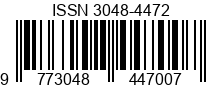
OPEN ACCESS POLICY ↗The ITJ LOCKSS and CLOCKSS publisher manifests identify the journal as Indonesian Tourism Journal, name CV. Austronesia Akademika as its publisher, and include the online ISSN 3048-4472. Readers should consult individual article pages and the public archive for article-specific publication records.
The long-term accessibility of scholarly publications depends on both reliable public dissemination and effective digital preservation. ITJ distinguishes between its online journal archive, which provides current public access to published works, and the LOCKSS/CLOCKSS publisher manifests, which communicate preservation permissions and archival-unit metadata to the corresponding systems.
These complementary mechanisms support preservation planning and scholarly continuity. Access to a publisher manifest should not be interpreted as independent confirmation that a preservation network has collected every published issue or guaranteed uninterrupted access to all future material.
ITJ publishes scholarly articles through its Open Journal Systems publishing platform.
Readers access previous issues, article records, and available full-text publication files through the official archive.
LOCKSS and CLOCKSS manifests identify eligible archival units and communicate preservation permissions.
Participating systems may preserve eligible content under their applicable technical and institutional arrangements.
ITJ makes its LOCKSS Publisher Manifest and CLOCKSS Publisher Manifest publicly accessible. For published articles, readers should use the ITJ Archives. For preservation permissions and archival-unit information, readers may consult the manifests. This statement does not claim that preservation-network ingest or membership has been independently verified.
For information about free public access, author rights, and the terms of scholarly reuse, consult the ITJ Open Access Policy and ITJ Copyright & License. ITJ publishes content under the Creative Commons Attribution-ShareAlike 4.0 International (CC BY-SA 4.0) license.
Indonesian Tourism Journal This work is licensed under
a Creative Commons Attribution-ShareAlike 4.0 International License
Published by:
CV. Austronesia Akademika, Tanjungpinang City. Kepulauan Riau Province. Indonesia
Email: [email protected] | Website: austronesiaakademika.com