COLLABORATION


MAIN MENU

ISSN BARCODE



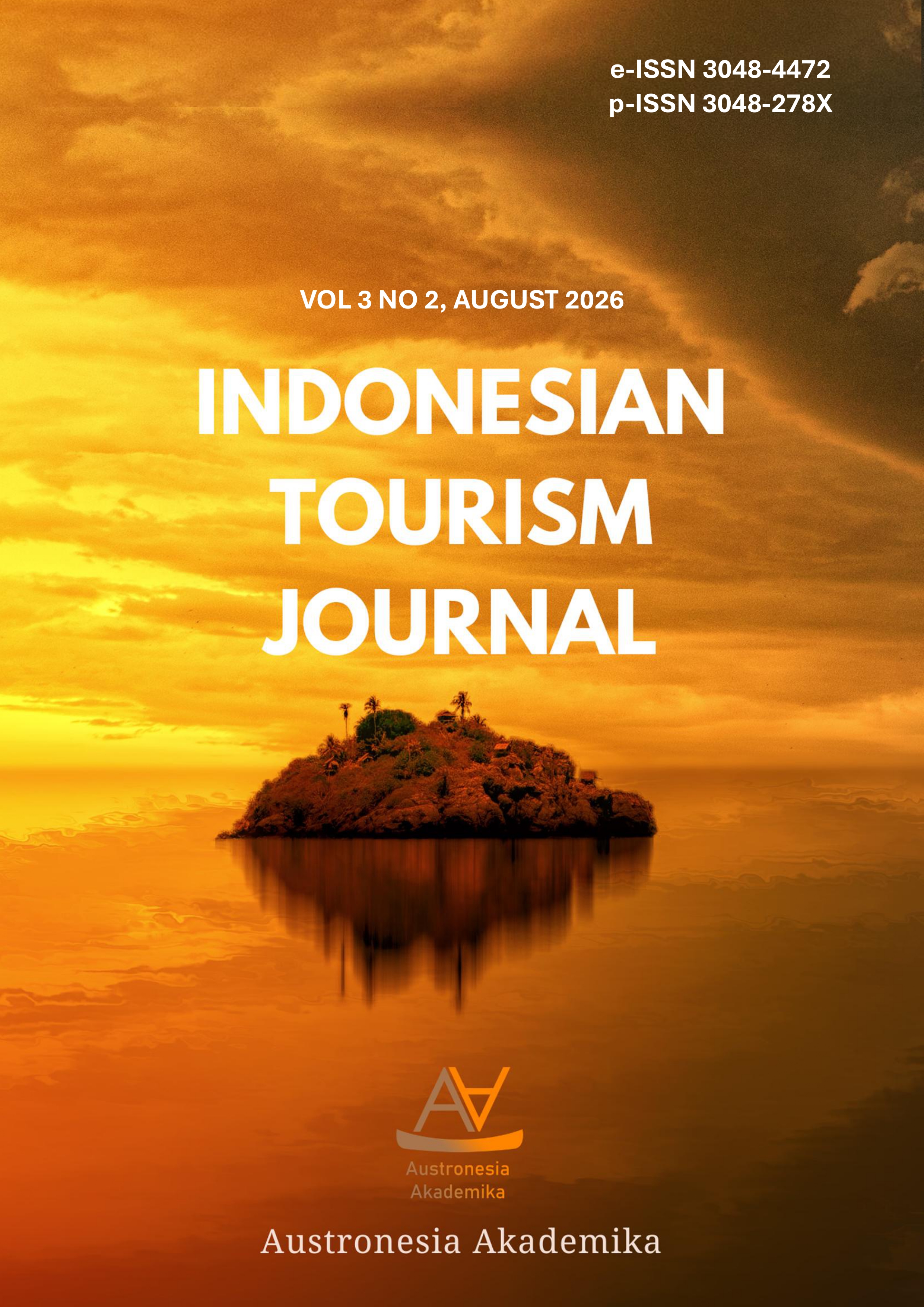
23 authors from Indonesia, Thailand, Malaysia, and Brunei Darussalam. The first The first article, “Tenurial Conflict Dynamics in the Governance of Sustainable Mangrove Ecotourism at Paluh Getah Beach” by Alvin Pratama, Kanokporn Swangjang, Zeenat Begam Yusof, and Nor Surilawana Sulaiman, examines how land tenure disputes, restricted community access, and fragmented stakeholder collaboration affect sustainable mangrove ecotourism management, emphasizing the importance of inclusive governance, equitable benefit distribution, and multi-stakeholder cooperation. The second article, “Revisit Intention in Coastal Ecotourism: A Value-Mediated Conceptual Framework for Bangka Belitung” by Dwi Jati Marta, Abdul Hafaz Ngah, and Arry Aditsya Yoga, develops a conceptual framework exploring how environmentally responsible consumption, digital tourism engagement, and coastal ecotourism experiences may influence tourists’ revisit intentions through perceived ecotourism value, highlighting the need for empirical validation and responsible destination management. The third article, “Tourism Hygiene in Supporting Tourist Confidence and the Sustainability of the Modern Tourism Industry in Indonesia” by Tika Pustika Fersari, Nur Afni Maftukhah, and Nor Surilawana Sulaiman, investigates the relationship between destination hygiene, tourist confidence, and sustainable tourism development, emphasizing sanitation standards, environmental cleanliness, health protection, institutional coordination, and stakeholder collaboration as essential components of destination competitiveness and visitor satisfaction. The fourth article, “Smart Tourism Policy Innovation In Pekanbaru: Integrating Urban Destinations and Local Revenue Governance” by Afrinaldy Rustam, Asrinaldy Asrinaldy, Hendri Koeswara, and Kamarudin Kamarudin, analyzes the integration of digital tourism services, urban destination management, and local revenue governance, proposing an institutional framework that connects reliable tourism information, integrated public services, digital promotion, and accountable fiscal management while identifying limitations in existing platform interoperability and revenue attribution. The fifth article, “Institutional and Policy Architecture for Tourism: A Comparative Study of Indonesia, Thailand, and Malaysia” by Natasya Gieserren Tivany, compares tourism governance structures and policy arrangements across three Southeast Asian countries, examining differences in administrative authority, institutional coordination, policy implementation, and collaborative governance while identifying opportunities to improve institutional integration and adaptive tourism policymaking in Indonesia. The final article, “From Tourism Revenue to Sustainability; Evaluating Bali’s Foreign Tourist Levy Governance, 2024–2026” by Muhammad Gavin Aryansar, evaluates the implementation of Bali’s foreign tourist levy as a financing instrument for cultural preservation and environmental protection, highlighting challenges in revenue collection, fiscal transparency, institutional accountability, and expenditure monitoring while emphasizing the importance of verifiable sustainability outcomes, community oversight, and evidence-based tourism governance.
Indonesian Tourism Journal This work is licensed under
a Creative Commons Attribution-ShareAlike 4.0 International License
Published by:
CV. Austronesia Akademika, Tanjungpinang City. Kepulauan Riau Province. Indonesia
Email: [email protected] | Website: austronesiaakademika.com