COVER JOURNAL

TABLE OF CONTENT

TOOLS







ISSN BARCODE


VISITORS

MATRIX JOURNAL
IN COORPORATION WITH




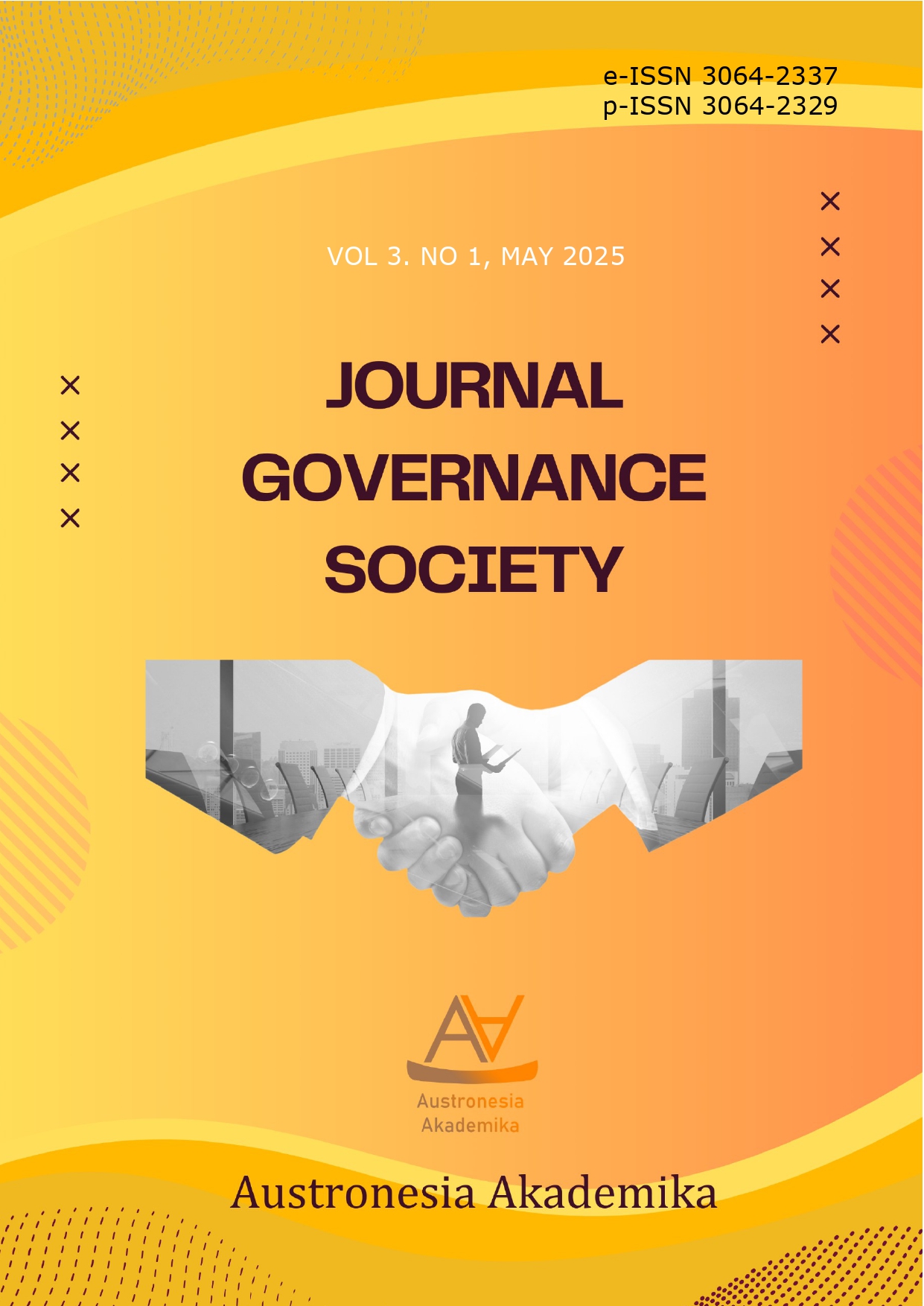
All 18 authors in from Indonesia, reflecting a strong contribution from Indonesian scholars to contemporary discussions on governance, public policy, social development, and public service delivery. The article “Mini Fuel Stations as Alternative Last-Mile Fuel Distribution in Non-SPBU Areas: A Qualitative SWOT–TOWS Analysis” by Safira Anindya Rizqi and colleagues examines mini fuel stations as an alternative mechanism for improving last-mile fuel distribution in areas without conventional gas stations, employing a qualitative SWOT–TOWS framework to identify strategic opportunities, challenges, strengths, and potential risks. In “Risk-Based Digital Governance in an Archipelagic Local Government: A Document-Based Study of the Lingga Regency Fisheries Office, Indonesia,” Kurnia Ananda Putri and Kamaruddin Kamaruddin explore the implementation of risk-based digital governance within the Fisheries Office of Lingga Regency, highlighting the relevance of digital administrative systems for strengthening governance capacity in an archipelagic local government context. Lamidi Lamidi and Natasya Gieserren Tivany, through their article “Evaluation of Cultural Governance Policy and Performance in Lingga Regency,” assess cultural governance policies and institutional performance in Lingga Regency, providing insights into the implementation and evaluation of local government initiatives for preserving and managing cultural affairs. Meanwhile, “Analysis of Factors Causing Stunting in Toddlers in Tanjungpinang City” by Resy Mirta Safitri and colleagues investigates the factors associated with stunting among toddlers in Tanjungpinang City, contributing to a broader understanding of local public health challenges and the importance of effective policy interventions. Lastly, “Governing Maritime Borderlands in an Archipelagic Frontier: Institutional Fragmentation, Security Pressures, and Policy Integration in Indonesia’s Kepulauan Riau Province” by Rifandi Saputra Edi and colleagues analyzes governance challenges in Indonesia’s maritime borderlands, particularly in Kepulauan Riau Province, with attention to institutional fragmentation, security pressures, and the need for greater policy integration in managing strategic archipelagic frontier areas. Collectively, the articles in this issue demonstrate the diversity of Indonesian governance research by addressing energy distribution, digital governance, cultural policy, public health, and maritime border governance across different local and regional contexts.
Journal Governance Society This work is licensed under
a Creative Commons Attribution-ShareAlike 4.0 International License
Published by:
CV. Austronesia Akademika, Tanjungpinang City. Kepulauan Riau Province. Indonesia
Email: [email protected] | Website: austronesiaakademika.com